
KNOW YOUR RIGHTS AT A ROADBLOCK: WHAT EVERY DRIVER IN SOUTH AFRICA SHOULD UNDERSTAND

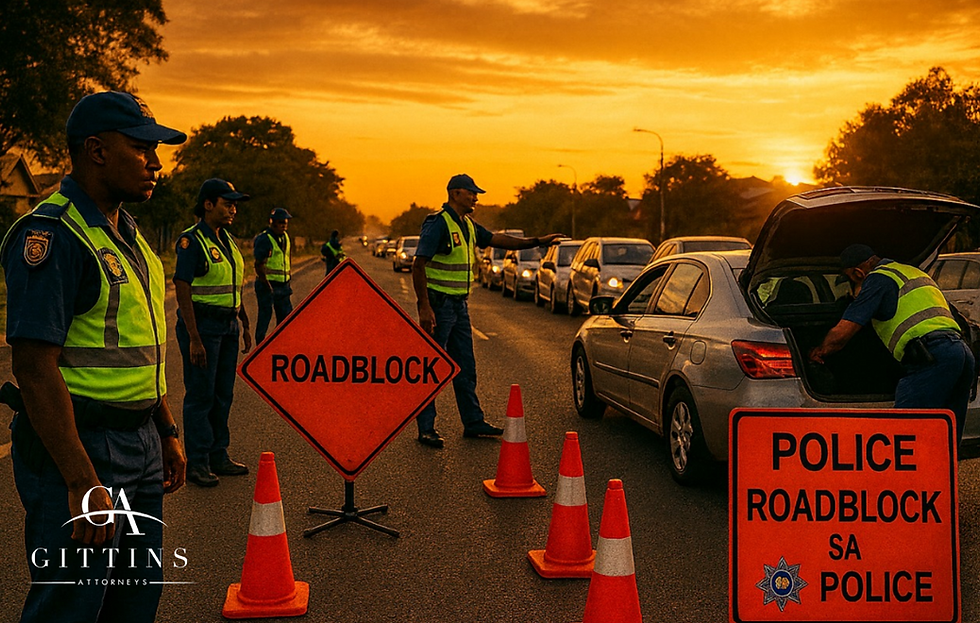
As we enter the festive season, many people behave as though the road laws are also on holiday. In reality, this is exactly when our traffic laws should be taken most seriously to ensure a safe and stress-free break for everyone. Law enforcement shares this concern, which is why roadblocks are a frequent sight during December. For most motorists, being pulled over by the police can feel intimidating - but understanding your rights and responsibilities can ensure a safe, lawful, and stress-free interaction.
This article highlights essential road safety measures, explains your rights at a roadblock, and clarifies what happens if officers inform you of outstanding traffic fines.
Road Safety Starts Before Any Roadblock
Motorists have a legal and practical duty to keep themselves, their passengers, and other road users safe. A few consistent habits go a long way:
Ensure your vehicle is roadworthy — tyres, lights, indicators, and brakes must be functional;
Keep your licence disc and number plates valid and visible;
Carry your driver’s licence with you at all times;
Avoid driving under the influence of alcohol or drugs;
Wear your seatbelt and ensure all passengers do the same; and
Obey speed limits and road signals, particularly where temporary roadblocks are set up.
By following these measures, you not only promote safety but also reduce the risk of complications during police checks.
Your Rights at a Lawful Roadblock
Under the National Road Traffic Act and SAPS Standing Orders, the police may conduct authorised roadblocks to check licences, vehicle roadworthiness, and outstanding warrants.
As a motorist, your key rights include that you may ask for identification. You are entitled to:
ask the officer for their appointment certificate (police ID); and
ask whether the roadblock is formally authorised.
You must stop when signalled
Failing to stop is a criminal offence. Once you stop you must cooperate, but you are not required to consent to a search of your person or vehicle unless certain legal grounds exist (e.g., reasonable suspicion, a search warrant, or a declared checkpoint in terms of the Criminal Procedure Act). Generally, when you are pulled over during an authorised roadblock, the police can search you and your vehicle without a warrant if they have a reasonable suspicion or if it forms part of the authorised general search. At informal checks, the police require your consent or probable cause before they are carry out any searches.
You may not be arrested for unpaid fines alone.
This is a key point many motorists misunderstand.
Outstanding Fines: What You Do and Do Not Have to Do
You do not have to pay traffic fines on the spot
In South Africa, police officers cannot compel you to pay outstanding fines at a roadblock. Spot-payment requests are unlawful unless an official, secure payment facility is provided — and even then, payment is voluntary.
A fine is only enforceable once served
If the fine has not been lawfully served (e.g., via registered mail or personal service), it cannot be enforced.
You can only be arrested if there is a valid warrant of arrest
A warrant must:
Be issued by a court,
Contain your correct personal details, and
Be physically shown to you.
If no such warrant exists, you may not be detained simply for having unpaid traffic fines.
You have the right to contest or make arrangements
Where fines exist:
Ask the officer for a printout or reference number;
Verify the fine through your local municipality or online traffic portal; and
Arrange payment or dispute the fine through proper channels — not roadside intimidation.
4. Stay Calm, Cooperative, and Informed
A roadblock should never become a hostile encounter. Protect yourself by:
Remaining calm and respectful
Keeping your hands visible
Complying with lawful instructions
Asking questions politely if you are unsure of your rights
Remember: knowing the law is one of the strongest tools you have to ensure fair treatment.
Final Thought
South Africans often feel uncertain when blue lights flash behind them. But when motorists understand both their responsibilities and their rights, roadblocks become what they are meant to be: a tool for public safety, not a source of fear.
At Gittins Attorneys, we remain committed to empowering the public with accessible legal knowledge. If you believe your rights have been infringed during a police stop or roadblock, our team is ready to assist.


Comments